Image Map
Showing posts with label healthy. Show all posts

Saturday, August 17, 2013

Black Bean & Chickpea Brownies

It's about time I did a post on the most popular recipe I have–black bean brownies.

I have made these brownies countless times, and they have yet to disappoint. This is the number one requested recipe thus far, so here it goes.

While I would love to claim this recipe as my own, I admit that I was not the brains behind this creation. This recipe is from www.chocolatecoveredkatie.com, and she has tons of incredible dessert recipes.


For Black Bean Brownies (I usually double this):

  • 1 1/2 cups black beans (1 15-oz can, drained and rinsed very well)
  • 2 tbsp cocoa powder–dutch or regular
  • 1/2 cup quick oats
  • 1/4 tsp salt
  • 1/3 cup pure maple syrup or agave (Honey will work)
  • 2 tbsp coconut sugar (or just more liquid sweetener)
  • 1/4 cup coconut oil*
  • 2 tsp pure vanilla extract
  • 1/2 tsp baking powder
  • 1/2 cup to 2/3 cup dairy-free chocolate chips (Not optional. Omit at your own risk.)
  • optional: more chips, for presentation
* You can sub applesauce for oil-free brownies, but they won't be quiet as moist.

Method to this madness:

Preheat oven to 350.
Rinse the black beans in a strainer thoroughly to remove the black gooey juice.
Dump everything into a blender except the chocolate chips.
Stir in chocolate chips manually.
Pour mixture into an oiled dish (I rubbed coconut oil all over it)
Bake in the oven for about 20 min, or until a toothpick comes out clean.
Let it sit on the counter until it is almost room temperature–it's better this way.


Next, I wanted to make something that didn't have a lot of chocolate. So here is the recipe for chickpea blondies:
(This makes a ton)

2 15oz cans of chickpeas
1 cup quick oats
1/4 cup unsweetened applesauce
3 tbsp coconut oil
2 tsp vanilla extract
1/2 tsp baking soda
2 tsp baking powder
1/2 tsp sald
1 and 1/2 cup maple syrup or agave nectar
optional: 1 cup chocolate chips

Method:
Preheat oven to 350
Rinse and strain the chickpeas
Add everything into blender except chocolate chips (you know the drill)
Pour into an oiled dish
Bake for about 25min or until a toothpick comes out clean


You could easily take these brownies to the next level by adding icing:

cashews + maple syrup + lemon juice in a blender 
or
banana + coconut flakes + cocoa powder in a blender
or
covering it in peanut butter.

Here I made a brownie sandwich:


(FYI, in order to subscribe to the email list, you have to either be on a computer, or if you're on a mobile phone, click "view full site." Then the email box should appear.)

Now go get to baking!

Tuesday, July 9, 2013

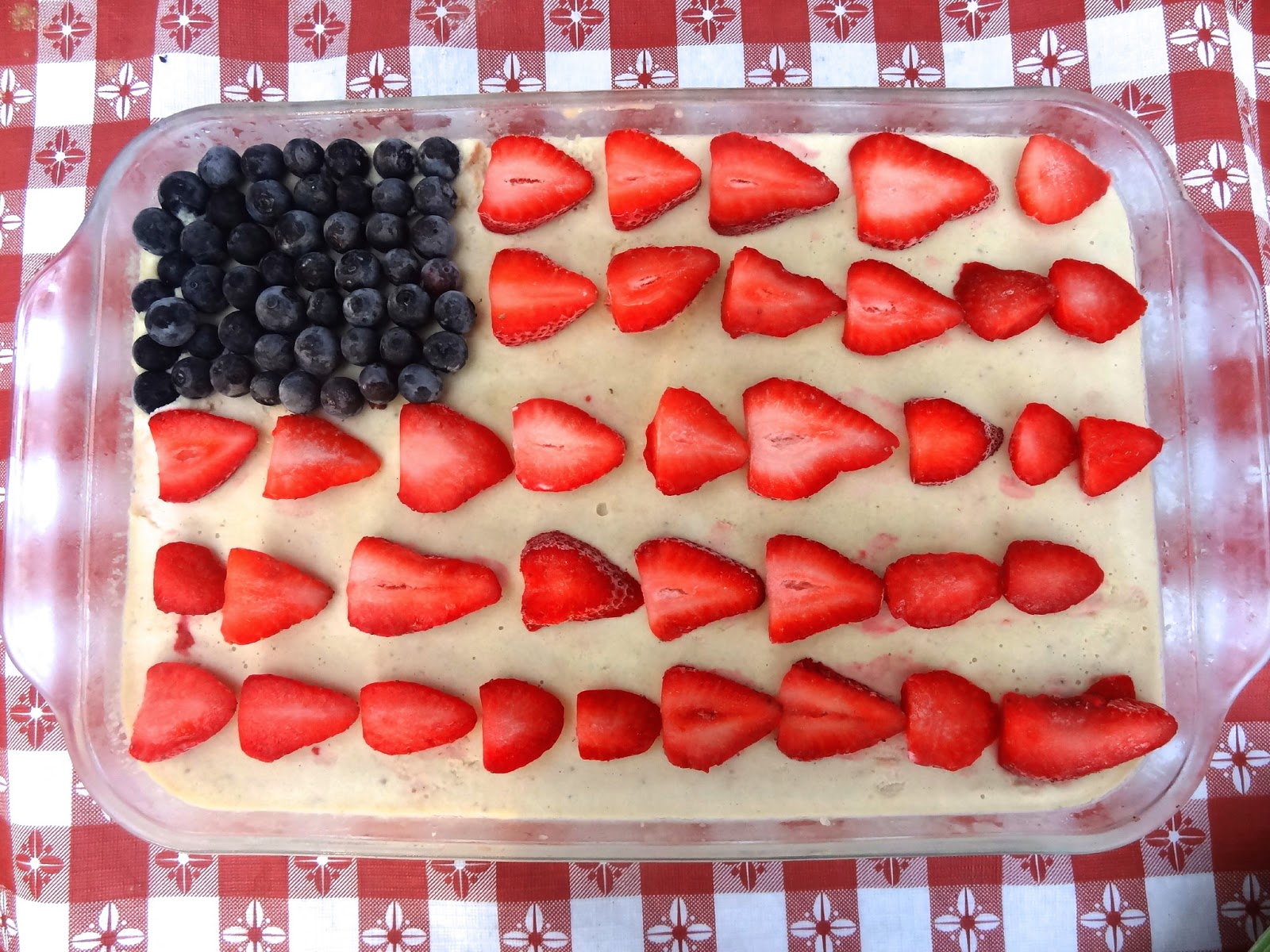
Independence Week Round-up: Brownie Kabobs & Cheezecake

The Fourth of July holiday time was too busy for me to blog, so I will sum it up in one post. The holiday was expanded into an entire week for my family which was a lot of fun. 

My family and I drove down to my grandma's house for our family get-together on the 3rd, and I brought a couple dishes along with me. (Usually to make sure that I get to eat desert also :D)

Black Bean Brownie Kabobs


For the brownies (adopted from chocolatecoveredkatie.com):

2 15oz cans of black beans (no ingredients added)
4 tbsp. cocoa powder (no sugar added)
1 cup of dry oats (quick oats work the best, but old fashion is fine as well)
2/3 cup of agave nectar or maple syrup
4 tbsp of coconut sugar (or just add more agave/syrup)
1/4 cup of coconut oil
1/4 cup of applesauce (no sugar added)
1/2 tsp salt
1 tbsp + 1 tsp vanilla extract
1 tsp baking powder
1 cup + 1/3 cup of dairy free chocolate chips (not optional!)

Icing:
Vegan cream cheese
lemon juice
maple syrup
powdered sugar

For the kabobs:
Kabob sticks
Strawberries
Blueberries

Method:

Preheat the oven to 350 degrees.
Blend all the ingredients except the chocolate chips into a blender or food processor. Then stir in the chocolate chips in with a spoon. Place in the oven and bake for about 25 min. When the timer goes off I usually just poke the center with a fork, and if it comes out clean then it's done. Otherwise keep it in for about 2-3 minutes longer.


 Once the brownies are done, let them cool off and sit for awhile.
Next, make the icing by adding all the ingredients into a food processor. Pour into a bowl and put it in the fridge until it thickens.


Once the icing has thickened, I spread it on each brownie piece. Then I just began loading each kabob! 

They were a big hit with the kids! (And adults too)

 
That night I had also made another desert, which was a raw vegan "cheesecake."

Star-Spangled Cheezecake (adopted from keyingredient.com)


What you need:
2 cups macadamia nuts
1 1/2 cups cashews
1/2 cup pitted dates
1/4 cup shredded coconut
6 tbsp melted coconut oil
1/4 cup lime juice
1/3 cup agave nectar or maple syrup
1 tbsp vanilla extract
6 tbsp water
berries for decoration

Method:

Soak the macadamia nuts and cashews in water overnight or at least 5 hours. (Pain in the butt, I know.)
Blend the macadamia nuts and dates in a food processor until it becomes crumb-like.
Sprinkle the shredded coconut flakes onto about an 8-inch dish.
Dump the macadamia mixture onto the dish and smash down with your fingers until it's evenly dispersed.
 Next, drain the cashews and put in the food processor/blender along with the coconut oil, agave/syrup, lime juice, and vanilla extract until it becomes creamy. Add the water to help.
Pour the mixture over the crust, spreading evenly.


Freeze for at least 2 hours.
Once frozen, add the berries and you're good to go!

*Serve immediately. It melts quickly!

I also made this same dish for Mother's Day, and it was a big hit! However, I think I will keep experimenting with difference raw cheesecake recipes until I find the perfect one.


Other meals from the week:


Sunday, June 30, 2013

Eating Out: Spiral Diner & Bakery

This past week my brother and I stayed with my aunt in Austin for a week to help around the house, and spend some time with my cousins. On Saturday we then had to go up to the Fort Worth area to attend a wedding reception for our friend Amy. With both the reception and the hotel's food choices being a bit limiting for my vegan diet, I was desperate for some good vegan food. I knew there just HAD to be some place in the Dallas/Ft. Worth area that we could scope out before we drive back to Houston. And man, did I find a good one. It was called Spiral Diner & Bakery. This restaurant is 100% vegan–not a single animal product available. So it just makes it that much easier, and exciting, to order because I know that I can eat anything!

My brother refused to get out of the way of this picture.


The inside was legit, but we decided to eat outside since the weather was so nice!

Nacho Supremo, aka DA BOMB

Cowboy Burger

Gluten-free burger with a nut-based patty

Protein Platter

Jamaican BBQ Sandwich (mine)

Homemade Peanut Butter Cup

Raw Chocolate Carrot Cake
 

 We also had several milkshakes as well, but we scarfed them down too quickly for me to snap a picture. They were delicious!

I really enjoyed eating here. I have never had such a difficult time ordering...there were just so many choices! They had tons of wraps/burritos, burgers, salads, sandwiches, and even pasta! I can't wait to go back and try something else.

Wednesday, June 26, 2013

Misconceptions About Protein in a Plant-Based Diet

When people find out that I eat a plant-based diet, the first question is always the same: "What do you eat for protein?!" I try my best to hide my irritation, because I know that it's not completely their fault for automatically thinking that way. For decades we are reminded by the meat industry about the importance of protein in our diet–which it is, just not from animals.

I feel that most of the time I struggle with the best wording to explain to facts in an effective way, so I am going to give you the information straight from the source. The following is from the book My Beef With Meat: The Healthiest Argument for Eating a Plant-Strong Diet by Rip Esselstyn. He is a fireman at the fire department in Austin, TX, and a big spokesman for a plant-based diet. 


Meat eaters throw a lot of false facts at you, but maybe the most common one is this: You can't get enough protein eating plants.

Puh-leeeeeeeeze! Stop this nonsense!! There is no such thing as protein deficiency in the United States. How many people do you know who were hospitalized for a protein deficiency? Zero! Now, how many people do you know who were hospitalized for heart disease, cancer, diabetes, or obesity-related ailments? Probably lots.

In fact, the majority of Americans are walking around in a state of protein overload–and it's a little wonder. We live in a country that is head over heels in love with anything that smells of protein. We've been so hoodwinked and bamboozled by the meat, milk, and egg industries that the majority of people, including well-meaning but misinformed doctors and nutritionists, haven't a clue that the best and most healthful sources of protein come from whole plants.

Yes, plants! So take a seat, because we're about to get real about protein. Let me start by giving you an analogy. If you are breathing air, you're probably pretty confident you're getting enough oxygen. Air is 21 percent oxygen and 79 percent nitrogen–but you're not overly worried about getting enough oxygen. As long as your lungs are taking in air, you're a happy camper and figure you're in good shape.

Now think about food and protein. If you're eating food, it doesn't really matter which foods you're eating–as long as you're taking in enough calories, you can pretty much rest assured you're also getting enough protein. Yes, protein is of prime importance, and is the most plentiful substance in the body besides water–but that doesn't mean eating more of it is better for you.

Many authorities, including the World Health Organization, recommend that protein should make up at least 10 percent of total calories in the human diet. The crazy thing is that most of us are getting much more than we need in terms of protein and calories.

In addition, because most Americans eat so much meat and so few whole, plant-based foods from an unfriendly source, namely animal protein. And animal protein is bad for our bones, creates an inflammatory state in our bodies, increases the risk of tumor development, raises cholesterol levels, and is hard on the liver and kidneys.

For healthy individuals, the World Health Organization recommends the following formula to calculate your daily protein requirement: (0.8 grams) x (your ideal body weight in kilograms) = protein in grams. So, for a 175-pound guy like me using the above formula I should be getting 64 grams of protein per day. This is an absolute snap!

So instead of relying on a third-class version of protein, why not go to the mother source–healthful and healing plants. Lets look at the amount of protein found in plant-based foods, so you can feel confident you're getting all the protein you need from eating them.

Twenty-five percent of the calories in your average vegetable come from protein–with many leafy green vegetables boasting as much as 50 percent! Your average bean contains 25 percent protein–soybeans as much as 40 percent. Your average bean contains 25 percent protein–soybeans as much as 40 percent. Your average whole gran contains 12 percent protein–quinoa as much as 18 percent. And even your average fruit contains well over 5 percent–lemons as much as 15 percent. So take those lemons and make lemonade!

 In fact, protein deficiency is so rare that I have never found a single person who knows the name of the medical condition that results from a serious lack of it in the diet. Not one person. What is the word? The answer is on page 18. (The word is kwashiorkor.)

The only two ways to blow it with protein are (1) not consuming enough calories to maintain a healthy weight, and (2) eating mostly foods that are high in fat and sugar (the chips, donuts, French-fries-and-soda-pop diet). If you're eating an unprocessed plant-strong diet while keeping a healthy weight, you're covered!


The second big and widespread misconception about protein is that plant proteins are somehow not "complete."

This one's not only not factual, it's not even a smart opinion. It is a fallacy, based on outdated research that was weak to begin with. So when someone slips this myth into conversation, take a deep breath and set up for an overhead slam.

But first, lets look at the definition of proteins. Proteins are nutrients made up of one or more chains of amino acids, which are essential to the structure, function, and regulation of every cell in your body. In fact, proteins are the most plentiful substance in the human body besides water.

The nomenclature surrounding proteins is the first source of misinformation about them. Each protein chain contains twenty amino acids, eight of which (called essential amino acids) can be obtained only through food. Foods with all eight essential amino acids are known as "complete" proteins. These foods include various types of meat, poultry, fish, eggs, milk, dairy, fruits, vegetables, whole grains, beans, nuts, and seeds. Yes, you heard me: fruits, vegetables, whole grains, beans, nuts, and seeds! The foods that you might sometimes hear called "incomplete" proteins aren't incomplete at all! In fact, the only incomplete protein in food comes from an animal-based source: gelatin.

Some people believe that they have to combine different plant-based foods to create "complete" proteins. This belief, called protein combining, was a theory initially put forward in the 1971 bestseller Diet for a Small Planet by Frances Moore Lappe. It quickly became one of the biggest myths in the dieting world. Ten years later, Lappe himself formally rescinded her position in the new edition of the SAME book: "In combating the myth that meat is the only way to get high-quality protein, I reinforced another myth. I gave the impression that in order to get enough protein without meat, considerable care was needed in choosing foods. Actually it is much easier than I thought."

By then, the damage had been done, but influential food-related organizations eventually began to come around. In 1988, for example, the Academy of Nutrition and Dietetics also amended its position on plant-based proteins. The organization's most recent statement on vegetarianism galvanizes their previous support on plant proteins:

"Plant protein can meet protein requirements when a variety of plant foods is consumed and energy needs are met. Research indicates that an assortment of plant foods eaten over the course of each day can provide all essential amino acids and ensure adequate nitrogen retention and use in healthy adults; thus, complementary proteins do not need to be consumed at the same meal."

Translation: Don't sweat it! You can eat a plant-strong diet and get your protein groove on.

So here's the deal: Animal protein and plant protein are both complete. The difference is that the composition and proportion of the amino acids in the animal protein are higher in the sulfur-containing amino acids, which in excess may be harmful.

On the flip side, plant proteins have a healthier composition and balance of essential amino acids, one that has been elegantly balanced by nature in a way that inherently protects us from inflammation and tumor growth. In addition, plants come with added gifts such as fiber, phytonutrients, and antioxidants. All of which are sorely missing in meat.

So the next time someone questions you on the dangers of eating a plant-based diet that is "lacking" or "incomplete" in protein, let that person know that you have found the mother source of protein, and it's spelled P.L.A.N.T.S.!!
   

For more information, or if you want to check out the book for yourself, click on the picture to go to his website!


Monday, June 24, 2013

Quick! Make a Taco Salad

Sometimes you just don't have time to cook, or maybe you just don't feel like it. I think that's usually when it's tempting to bust out the processed food from the freezer–hot pockets, chicken nuggets, pizza–but it's really not necessary. There are many healthy options that you can easily whip up on a time crunch. For example: taco salad.

I love to make myself a taco salad for lunch right before I need to leave to go somewhere. It's just a ridiculously easy thing to make.


To build a great taco salad, here are the basics:
  • A leafy green. I used a spring mix, but you could even use spinach leaves if you like.
  • A bean. I prefer black beans, but sometimes I'll use pinto beans or even re-fried beans. Central Market came out with a canned re-fried bean that is completely healthy.
  • Corn. Something about corn just always makes a dish feel more Mexican. I like to get the Central Market frozen sweet corn. Central Market is certified non-GMO.
  • Salsa! Check the ingredients on your salsa to make sure it doesn't have anything ridiculous. 
  • Extras: Avocado/Guacamole. Luckily HEB makes fresh tubs of it daily. I always hit that up when I'm at the store. I also added mushrooms, but you could really just get creative with it.
  • *I seasoned my beans for more flavor: cumin, garlic & onion powder.
 Taco salads are pretty much a staple for lunch in the summer for me. The ingredients are things that we constantly have in the house anyways. So it's a pretty reliable and convenient meal. 

You could take it a step further and wrap it up in a tortilla to make it more filling if you wanted to. I bet that would be delish.

What's your favorite thing to put on a taco salad?